


Small Business Development Center: Houston Growth Guide 2026
Small business development centers are a free, SBA-funded public resource delivered through roughly 63 lead centers and more than 900 local service points. In Houston, that means you can book one-on-one counseling and group training without paying a consulting fee.
If you're staring at a cash-flow problem, a lender packet, or a growth plan that's gotten too messy to fix alone, that's the right moment to use a small business development center. Not after the bank says no. Not after the lease is signed. Right when the numbers stop making sense and you need a second set of eyes.
Table of Contents
- What a Small Business Development Center Actually Does
- How the SBDC Network Is Built
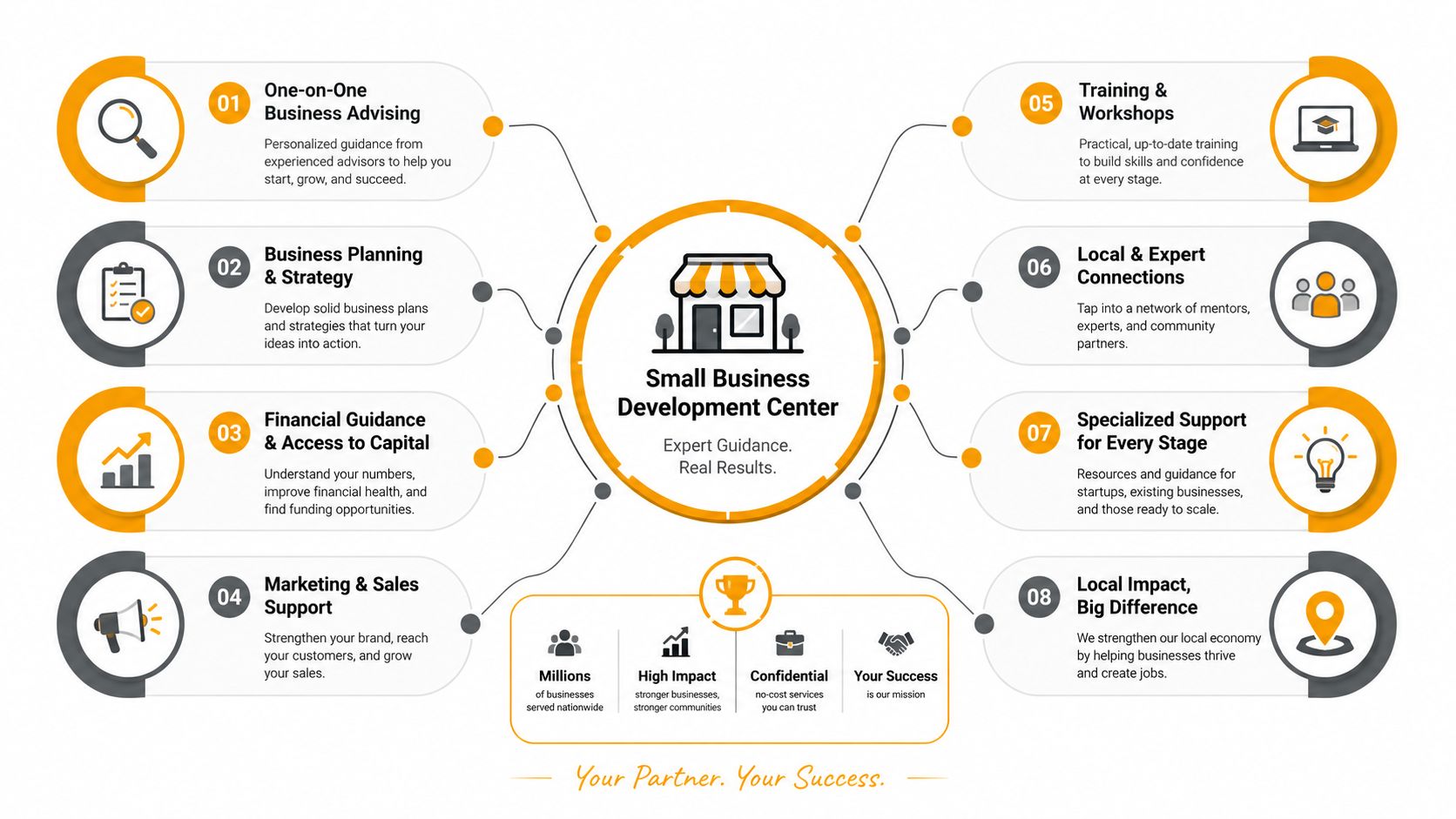
- Services You Can Get From an SBDC
- SBDC vs SCORE, SBA, and Chambers of Commerce
- How to Find Your Local SBDC and Book a Session
- What Happens After Your First Counseling Session
- Pairing SBDC Strategy With Managed IT Support
What a Small Business Development Center Actually Does
The first real value of a small business development center is simple, it gives an owner a place to stop guessing. When the books look thin, the loan pitch feels weak, or the expansion plan is too hand-wavy, an SBDC counselor helps pressure-test the numbers before you burn more time and cash.
Not a lender, not a regulator
An SBDC is not where you go to get approved like a bank and it's not a government office that issues permits. It's a counseling and training partner funded through the SBA and delivered locally through host institutions, which is why the service feels practical instead of bureaucratic. The network has been built to help with planning, capital access, marketing, operations, and growth strategy, not to replace the lender, accountant, or attorney.
That distinction matters in Houston. A contractor trying to bid larger work needs financial packaging and job-cost discipline. A retailer opening a second location needs feasibility work, not a pep talk. An SBDC advisor can help you sort which problem is real and which one is just noise.
Practical rule: If the issue is strategy, financing readiness, or operational clarity, start with the SBDC. If the issue is a legal dispute, payroll crisis, or hands-on tech repair, you need a different specialist.
What the free help really means
The service is free or low-cost because federal and state dollars cover the counseling model. That's why the best way to think about an SBDC is as a public advisory relationship you schedule, not a grant program you apply to. You bring the business problem. They bring structure, templates, and accountability.
The upside is obvious. The downside is also obvious. You won't get a done-for-you marketing agency, a lender, or an IT crew out of the box. You'll get a sharper plan, a cleaner packet, and clearer next steps.
If your problem is still fuzzy, the SBDC is usually the right first stop. If your need is execution-heavy from day one, such as network setup, server management, or device support, that's outside the lane of counseling and belongs with a technical services partner.
How the SBDC Network Is Built
Most owners miss the delivery model. A small business development center sits inside a national system, but it does not operate like one federal office with one playbook. The SBA and Congress describe about 63 lead centers and more than 900 service centers / delivery points across states and territories, with counseling delivered through universities, state agencies, and local partners.
Why Houston owners should care about the structure
That setup is why the experience feels local. You are not dealing with a distant office in Washington. You are dealing with a counselor who understands regional lenders, Texas host institutions, and the business mix that shows up in Houston, from energy support firms to healthcare logistics, construction, and professional services.
The local layer matters just as much as the national one. SBDCs work under SBA program goals, so the network tracks outcomes like business starts, financing, and growth. Local centers still tailor advice to the market they serve. That combination helps when you need financial discipline and local context in the same room.
The mandate is broader than startup advice
SBDCs are designed to help in operations, manufacturing, engineering, technology exchange, finance, accounting, business strategy, and productivity improvement Congressional Research Service. That is much broader than the usual “free startup help” line people throw around online.
For a Houston owner, that breadth is the point. A distributor may need help tightening margins. A clinic may need better workflow design. A manufacturer may need support with process improvement. The SBDC is meant to function as a management-and-technical-assistance layer, not a narrow startup club.
Houston takeaway: Use the local center for the business issue you actually have, not the one you wish you had. A strong SBDC counselor can help you frame the problem before you go shopping for capital, software, or a lease.
To find the right host site, start with the Texas lead center and then identify the service point tied to your county or district. That extra step matters because the most useful counselor is usually the one who knows your local market, your industry, and the lenders who answer the phone.
Services You Can Get From an SBDC
A good small business development center gives you a menu, not a miracle. That is the right expectation. The work is practical, and it often feels plain, because plain paperwork is usually what moves a business forward.
The core services that matter most
One-on-one counseling is the main event. An owner shows up with a P&L, a draft pitch deck, a lease question, or a growth idea, and the counselor takes a hard look at the numbers and the decisions behind them. Group training and workshops are the quicker option, useful when you need a baseline on cash flow, pricing, hiring, or lender readiness.
Here is how that tends to show up in Houston:
- Loan packaging: A contractor preparing for an SBA-backed loan uses an SBDC to clean up financial statements and tighten the story for the lender.
- Market research: A retailer considering a second location uses the center to test demand before signing another lease.
- Cash-flow review: A service business with strong sales but thin cash uses counseling to identify timing gaps and payment terms.
- Government contracting support: A firm chasing public-sector work uses the SBDC to understand registration, bid packaging, and compliance basics.
- Growth planning: A healthcare clinic preparing for new billing or service lines uses the SBDC to map staffing, pricing, and workflow.
- Targeted outreach: Veterans, women, and minority-owned businesses often use the center for guidance that is more structured than peer advice and less intimidating than a bank meeting.
Cybersecurity and technology adoption show up more often now too. Counselors can help you think through risk, tools, and process, but they are not there to run the systems. If the work turns into deployment, managed IT is the next call, not another counseling session.
Capital is another place where owners get value, but only if they treat the SBDC as part of the process, not the whole process. The counselor can help organize financials, pressure-test projections, and shape the borrowing story before you talk to lenders. That matters if you are comparing comparing Community Advantage SBA options, because the packet has to make sense on paper before anyone will take the file seriously.
What it costs and what it doesn't
Most advising is free, and most training is free. Some specialized workshops or conferences may charge a small fee, which is normal for hosted events and not a sign that the center is turning into a consultancy. The cost is your preparation.
Bring current financials, a draft business plan if you have one, and a short list of decisions you need to make. If you walk in with a vague wish like “I want to grow,” you will leave with generic advice. If you show up with a lender packet, a payroll problem, or a pricing question, you will get work product you can use.
Bring the operating details too. For a Houston owner, that means lease terms, payroll timing, vendor terms, customer concentration, and any software or process bottlenecks that are slowing the business down. If the issue is partly operational and partly technical, the SBDC can frame the business side while a managed-IT partner handles the systems, security, and day-to-day support.
SBDC vs SCORE, SBA, and Chambers of Commerce
Houston owners mix these up all the time, and it slows them down. A small business development center is one tool in the mix, but it's not the only one, and it's not always the right first call.
| Resource | Best For | Cost | Format | Houston Access |
|---|---|---|---|---|
| SBDC | Strategy, capital packaging, operations, market research | Usually free | One-on-one and workshops | Local service points across the region |
| SCORE | Early-stage mentoring and founder-to-founder guidance | Usually free | Volunteer mentoring and classes | Local chapters and online support |
| SBA | Loan programs, guarantees, and federal small-business programs | Varies by program | Agency programs, not advising | Federal programs through approved lenders |
| Houston chambers | Networking, visibility, and local advocacy | Membership-based | Events, referrals, community access | Strong local presence |
SCORE is good when you want an experienced mentor and a sounding board. It's weaker when the problem is building a lender-ready packet. The SBA funds the SBDC system and runs loan and support programs, but it doesn't function like a counseling office for day-to-day owner questions. Chambers are useful when you need relationships, introductions, and local visibility, not deep financial triage.
If funding is the primary issue, pair counseling with capital options. For owners evaluating lender paths, the resource on comparing Community Advantage SBA options is worth reading because it helps frame how SBA-backed capital fits into a broader financing strategy.
Decision rule: Start with the SBDC if you need strategy or loan packaging. Start with SCORE if you want peer-style mentoring. Start with a lender if you already know the capital product you need. Start with a chamber if your goal is visibility and relationships.
CDFIs and microlenders sit in a different lane again. They provide money, not counseling. In practice, Houston owners often use an SBDC first, then move to a lender or CDFI once the paperwork is tighter and the story is cleaner.
How to Find Your Local SBDC and Book a Session
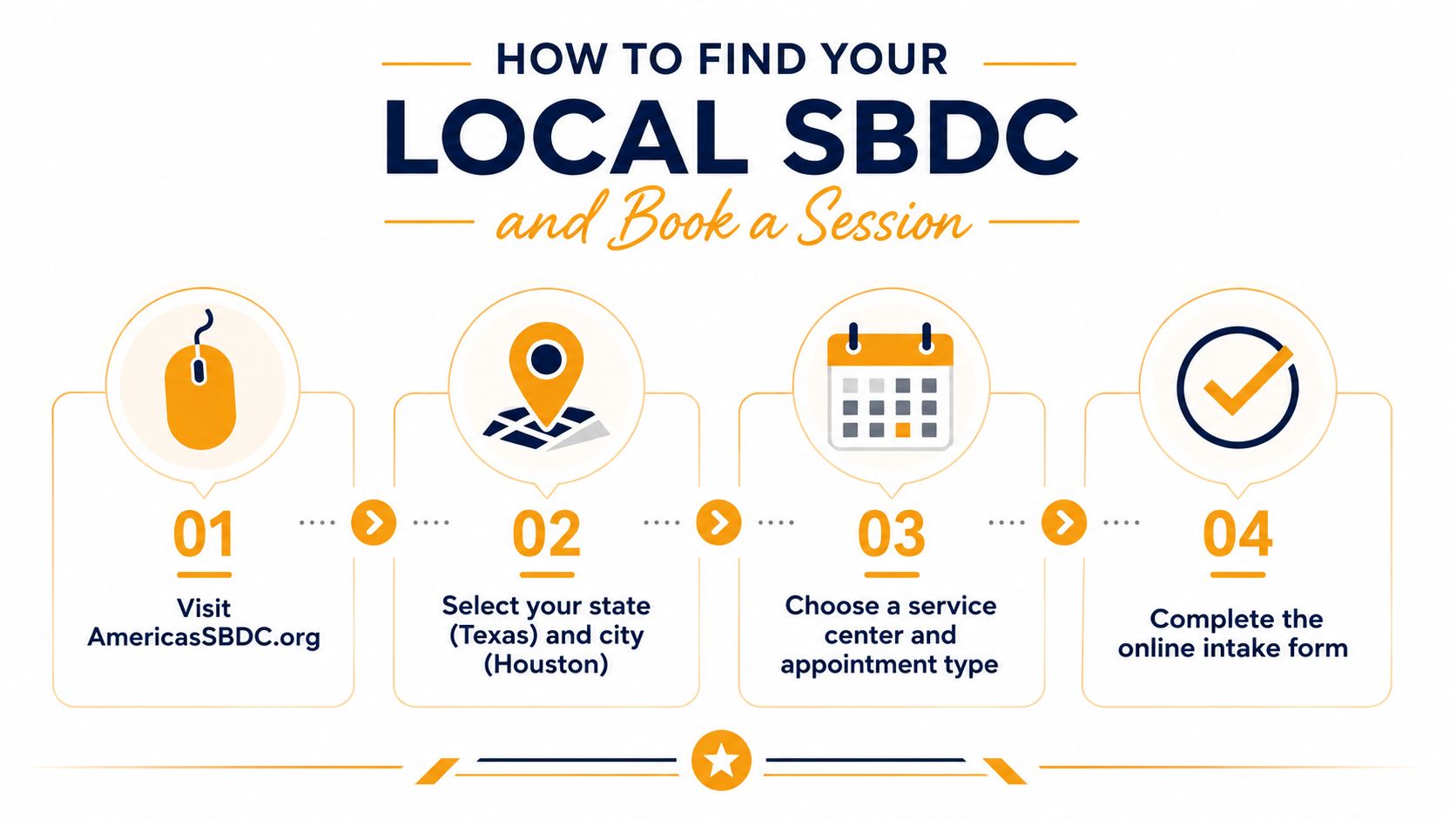
Finding the right center is not hard, but you do need to be deliberate. The simplest route is the America's SBDC directory, where you can locate the Texas lead center and then identify the Houston-area service point that serves your county or district. That matters because appointment style, counselor availability, and industry focus can vary by site.
What happens before the appointment
Most centers use an intake form and a short needs assessment before the first session. You'll usually be matched with a counselor based on the problem you described, and if your business has a specific industry angle, the center will try to route you to someone with relevant experience.
Appointments can be in person, by phone, or by video depending on the center. During busy periods, you may wait a bit before the first meeting, so don't wait until the bank deadline is tomorrow.
Eligible clients generally include current and aspiring small business owners who meet SBA size standards, with special outreach to veterans, women, minorities, rural founders, people with disabilities, New Americans, and other underserved entrepreneurs.
What to bring so the session produces work
Bring the documents that force the discussion to be real:
- Recent financial statements: Profit and loss, balance sheet, and cash-flow detail if you have it.
- Tax returns or summaries: Enough to show historical performance and spot gaps.
- A draft plan or lender packet: Even a rough version helps the counselor focus.
- Specific questions: Pricing, staffing, location, expansion, or loan readiness.
- A clear goal: State what decision you need to make in the next 30 days.
If your business depends on better systems, better hardware, or cleaner support processes, keep a separate note on that. A counseling session can flag the need, but the execution usually belongs with a technical partner such as Houston small business IT support.
The cleanest first meeting is the one where the counselor can leave with something concrete to review. If you arrive organized, you turn a free session into a real business work session instead of a polite conversation.
What Happens After Your First Counseling Session
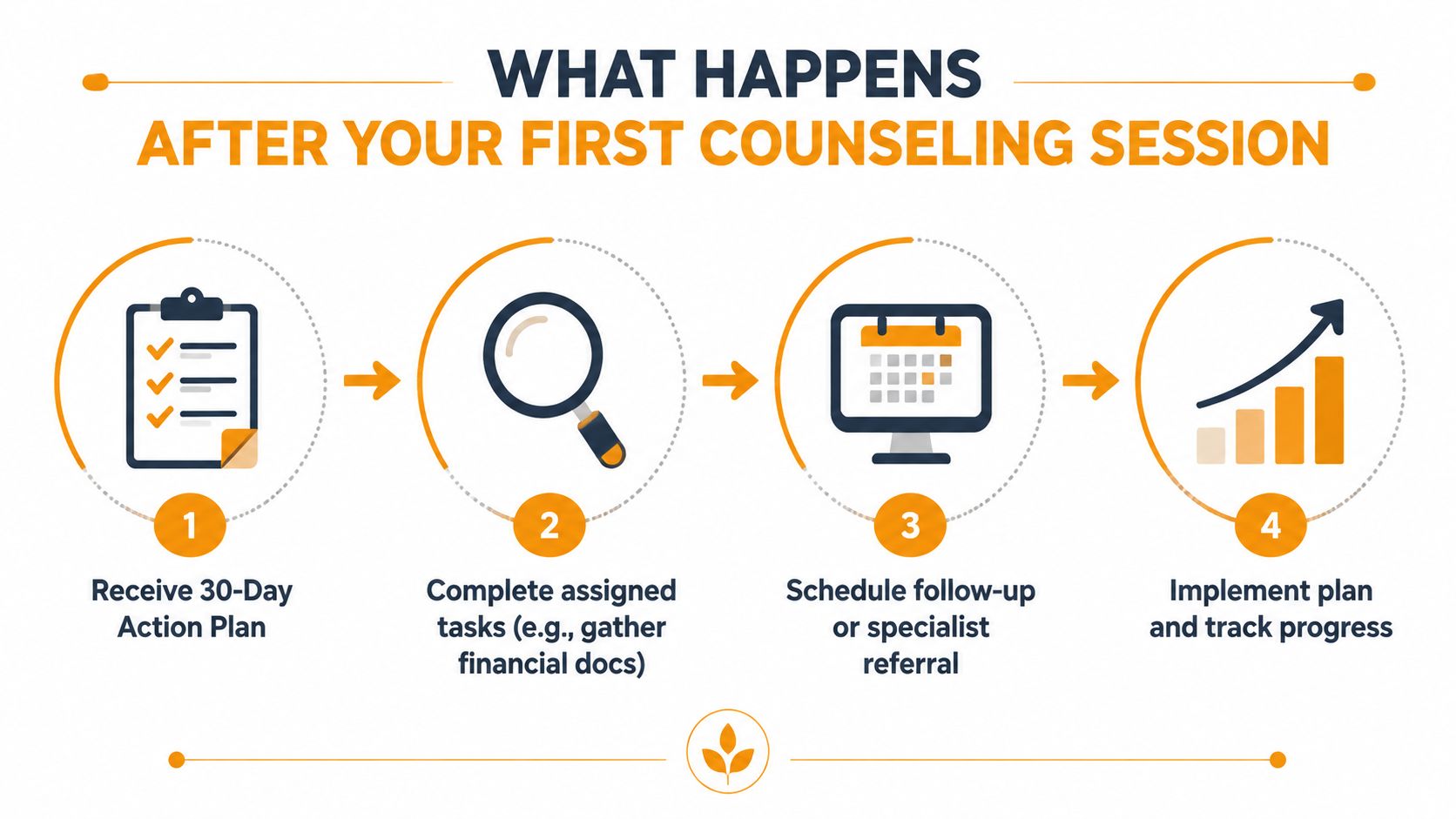
A good SBDC meeting ends with work assigned, not polite encouragement. In Houston, the counselor should send the owner out with a short action plan, a follow-up date, and a clear call on the next move, capital, research, or operational cleanup.
The usual path from meeting to momentum
One owner walks in with a messy loan request. The counselor asks for statements, checks the margins, and sends the owner out with a tighter list of documents to gather. Another owner comes in with a location idea, and the counselor pushes for market research before anyone signs a lease. Another needs financing options, and the advisor points the business to the right lender or capital channel.
That middle step is where the system proves its value. The SBDC is not handing out money. It is helping you become the kind of borrower, buyer, or applicant a lender can evaluate.
The public impact numbers show why owners keep using the network. In FY2023, SBDCs helped clients start 20,738 new businesses and supported more than 35,159 capital infusion transactions totaling over $6.8 billion; the Congressional Research Service says that activity also supported over one million jobs America's SBDC history and impact summary. Those results line up with what Houston owners see in practice, more prepared borrowers, cleaner applications, and fewer bad surprises once the paperwork reaches a lender.
Where the advisor stops and execution starts
That is where a lot of owners stall if they do not have an operating plan. The counselor may help sort the strategy, but the rollout still needs work. If the plan calls for cloud migration, endpoint security, a Wi-Fi redesign, or new devices for a second location, the execution belongs to someone who handles the operational details.
The SBDC can also keep you accountable with follow-up sessions. That matters because owners often underestimate how much cleanup comes before funding and how much coordination happens after it. If you want the money to turn into growth, the paperwork, the systems, and the people work need to move together.
The financial counseling piece is the front door. The outcome is whether your business can absorb the next step without breaking, and whether your IT and operating plan can support it. If the session shows that you need a clearer technology roadmap, use how to create and implement an effective IT strategy for small businesses to turn that advice into a real plan.
Pairing SBDC Strategy With Managed IT Support
An SBDC gives you the plan. A managed services provider gives you the execution. Houston businesses move faster when they use both, because the strategy work and the technical work are not the same job.
When an SBDC counselor flags a cybersecurity gap, that recommendation needs implementation. When the growth plan calls for a second site, someone has to handle cabling, Wi-Fi, VoIP, endpoints, and user setup. When capital is approved for software or cloud migration, the migration still has to be planned and tested across tools like AWS, Azure, or Google Workspace.
Practical rule: Use the SBDC to decide what should change. Use a managed IT partner to make the change actually happen.
That split is especially important in family-owned businesses, partnerships, and divorce-driven transitions, where control, access, and continuity can get messy fast. For owners dealing with that kind of pressure, local advice for business owners divorcing can help you think about the legal side while you keep the operating side stable.
The same logic applies to IT service delivery. A counseling session can tell you that you need better support, backup, or security. A Houston-based managed IT team such as IT Cloud Global, LLC can handle the helpdesk, monitoring, repair, network setup, and cloud administration that keep the business running day to day. If you're comparing the role of ongoing support, the overview of benefits of managed IT services lines up with what owners usually need after the SBDC work clarifies the plan.
Start at the SBDC for strategy and capital packaging, then bring in a managed IT partner for implementation. That sequence keeps you from paying for technology before you know what the business needs, and it keeps your growth plan from dying in a spreadsheet.
IT Cloud Global, LLC helps Houston businesses put the technical side in order with managed IT services, helpdesk support, network setup, cloud administration, and repair services that fit real operating needs. If you're using an SBDC to sharpen your growth plan, visit IT Cloud Global, LLC to line up the IT execution that turns that plan into daily uptime, cleaner workflows, and less friction for your team.